
Ashland Previous Resident Sources
No single roll gives a full chain of Ashland previous residents. Start with the newest reliable record and work back. Dates matter because the PVA fixes tax ownership as of January 1, deed recording can occur later, and printed sources only describe the year shown.
| Source | Years It Covers | Where Held | What It Shows |
|---|---|---|---|
| PVA assessment | Current roll, keyed to January 1 | Boyd PVA and qPublic | Parcel, situs, tax owner, mailing address, assessment year |
| Deeds and instruments | Online start year not verified | Boyd County Clerk portal and office books | Recorded transfers, book/page, legal description |
| Ashland directories | 1897 general; 1902 and 1907 merchant leads | Winder Room and KHS | Names, addresses, and business or household context |
| Federal census | Public schedules after the 72-year restriction | National Archives | Households and nearby names during an enumeration |
| Sanborn maps | Holdings 1867-1970; Ashland leads 1886 and 1890 | Winder Room | Block numbers, footprints, streets, and utility detail |
For a modern chain, begin with the PVA and Clerk. For an early question, start with an exact directory year and Sanborn sheet, then use deeds to test ownership. Library obituary, cemetery, and marriage indexes can add dates, but they do not establish title or occupancy alone.
Fix the Ashland Address
Write down the exact number, street, suffix, unit, city, and postal code. Add the parcel ID from the Boyd PVA search route. Preserve mailing and situs addresses separately. Situs means the physical parcel; mailing is where tax correspondence goes. Neither alone says who occupied the home.
Keep a second column for historic variants. Ashland directories and Sanborn sheets may use old house numbers, block numbers, abbreviations, or former street wording. Research did not locate a verified Ashland renumbering timeline. When forms conflict, ask City Planning and the Winder Room for dated maps rather than guessing.
Note: The parcel ID and legal description are stronger continuity keys than a street string that may have changed.
Trace Boyd Deeds Backward
The Boyd County Clerk keeps the recorded land trail. Its online-records page hands users to a paid Courthouse Computer Systems account. The visible portal did not expose a live deed row or its exact historic start year. Older records may require office indexes, books, or staff help at the Ashland branch or main Catlettsburg office.
- Record the PVA parcel, situs, assessment year, and January 1 owner.
- Find that owner's acquisition deed as grantee, the party receiving title.
- Read the grantor name, recording date, book/page, and legal description.
- Search the grantor as a prior grantee and repeat the chain backward.
- Compare parcel, lot, plat, and legal description at every transfer.
For blocked online access, request a specific book/page, instrument, parcel ID, or date range. The Clerk's Ashland branch is at 1505 Carter Avenue, Suite 100, with listed weekday hours of 9:00 to 4:30. Confirm current access and copy terms before visiting.
- Grantor
- The party transferring an interest.
- Grantee
- The party receiving an interest.
- Chain of title
- The linked sequence of recorded transfers for the same land.
- Legal description
- The deed's formal land description, often more stable than a street address.
Ashland's January Ownership Quirk
The Boyd PVA identifies an owner for tax purposes as of January 1. A sale later in the year can leave the prior name on the tax bill until the next tax cycle. This local numbers story explains an apparent conflict without assuming that either office is wrong.
Compare assessment date, deed transfer date, recording date, and the year on the tax record. The PVA shows assessment ownership, while the Clerk's instrument shows a recorded transfer. A previous residents timeline should label both instead of forcing them into one undated field.
Map Past Ashland Numbers
The Winder Room local-history collection lists Sanborn maps among more than 6,000 print volumes and over 6,200 microfilm items. The maps can show block and house numbers, building material and size, street width, water mains, alarms, and hydrants. Those facts help match a structure across a changed address.
Sanborn evidence describes the built block, not the owner. Pair a map sheet with a deed legal description and directory entry from the same period. The collection reports map holdings from 1867 through 1970, and finding aids identify Ashland leads for 1886 and 1890. Ask staff for the original sheet, date, and call number.
Ashland Previous Household Records
Ownership is only half the history. A city directory may place a named householder or business at an address, while a census records a household during an enumeration. Verified leads include an 1897 general directory plus 1902 and 1907 merchant directories. The complete year run and a reverse series were not verified. The collections are covered on the Ashland city directory page.
- Select the closest directory year and copy the entry exactly.
- Locate the nearest public schedule through the National Archives.
- Compare names, ages, street context, and nearby households.
- Move to the next directory year and record changes.
- Test each inferred move against a deed, obituary, marriage, or cemetery record.
The National Archives explains census coverage and the 72-year access rule.
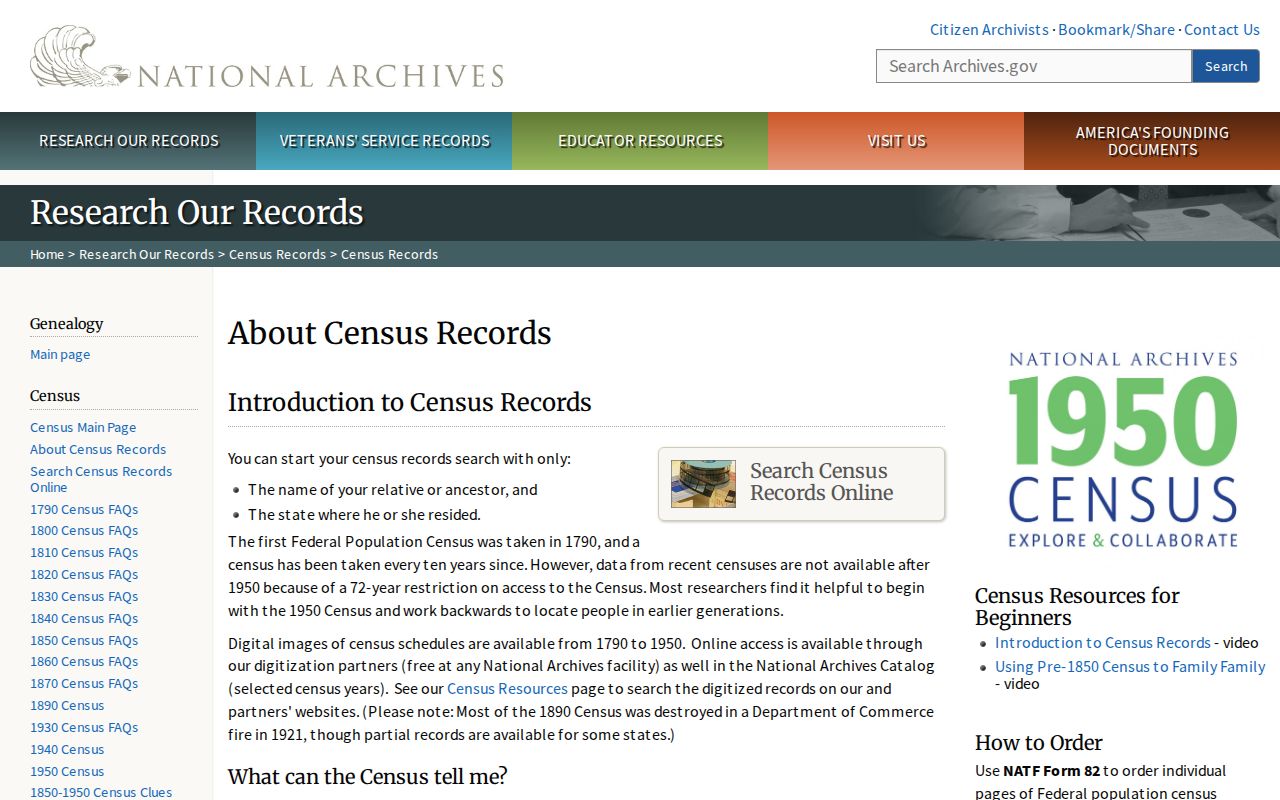
The census route adds a dated household snapshot that remains distinct from ownership.
Lawful use. Research Ashland previous residents for house history, family history, or personal curiosity. Never use records to track, harass, or harm a living person.
Confirm Ashland Life Events
The Winder Room's Boyd obituary index covers the Daily Independent from July 1922 through December 2023, but coverage varies. About half of 1949 through 1970 is indexed. Later volunteer scrapbook and OCR periods also have limits. The index does not contain the obituary itself, so ask for the source page.
Kentucky's Office of Vital Statistics issues birth and death records from 1911 forward and marriage or divorce records from June 1958 forward. Birth records become public after 100 years and death records after 50 years under KRS 213.131. Older Boyd marriage leads can use the library's 1860 through 1920 index and then the Clerk.
Kentucky's birth-certificate guidance shows the state route.
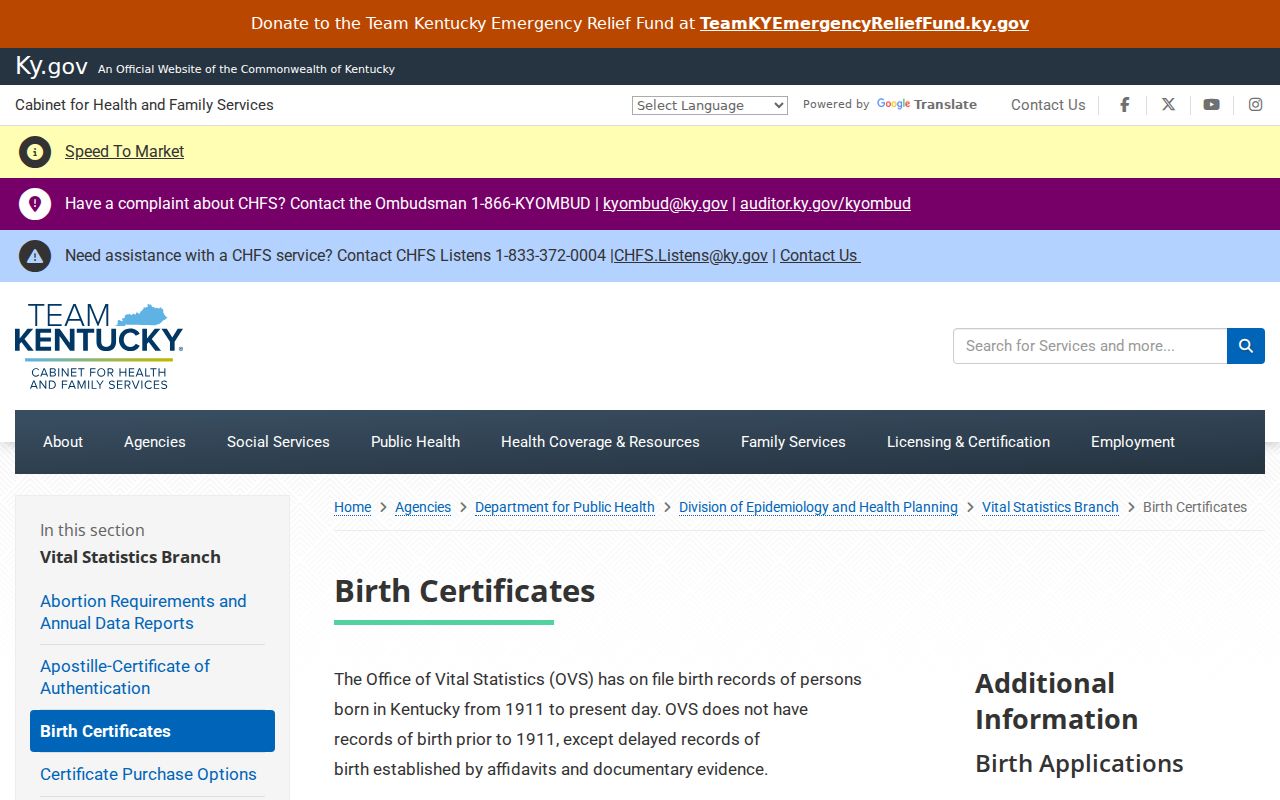
A certificate confirms a life event, not continuous occupancy at one address.
Kentucky's marriage and divorce guidance gives the modern coverage boundary.
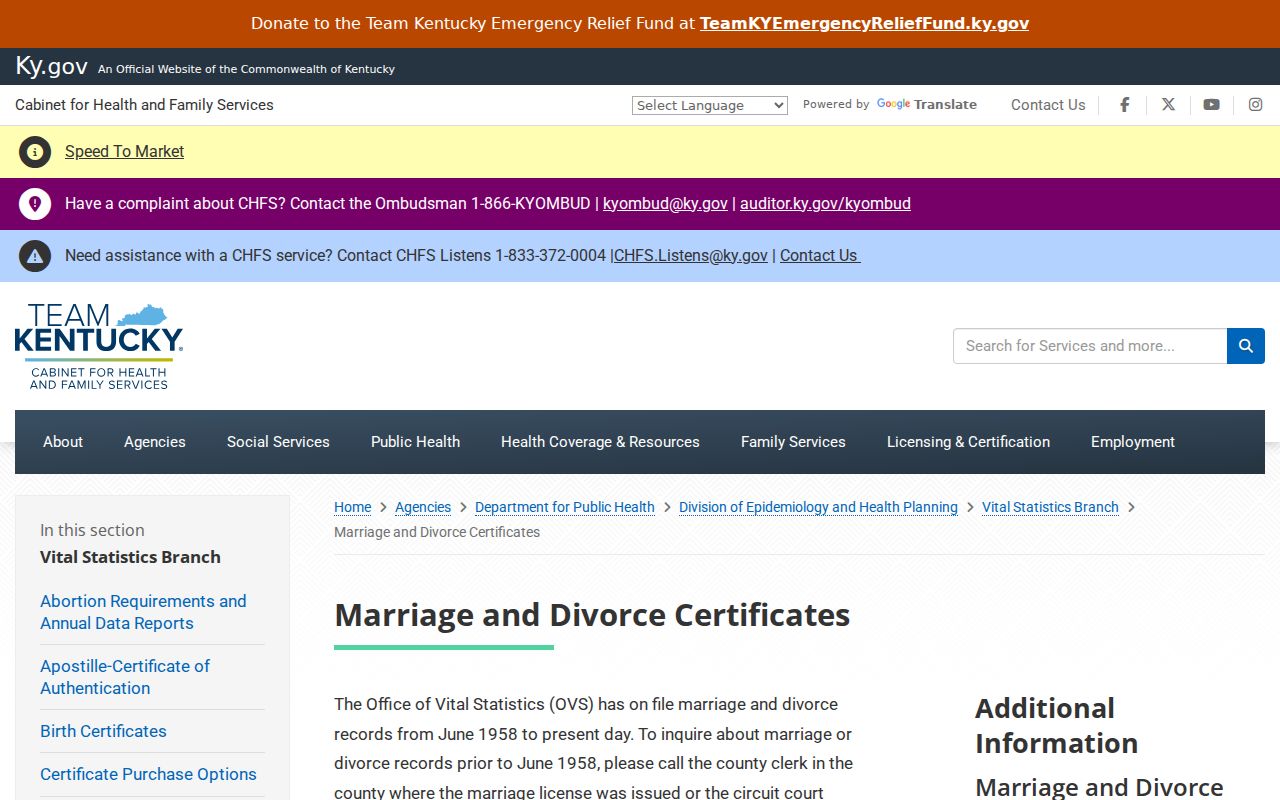
Use the event date as a clue, then return to a directory, deed, or census for the address link.
Ashland's Missing Cemetery Layer
Ashland Cemetery records in the library database are strongest from about 1900 forward. The Winder Room notes that much pre-1900 material was lost to fire. A blank early result should lead to newspapers, church and family histories, directories, deeds, and KHS or KDLA records.
KDLA's courthouse-disaster reference showed no Boyd disaster year. That does not prove all county records survived. Classify a missing deed as outside online coverage, never digitized, transferred, misindexed, or unavailable before assuming a courthouse fire.
KDLA's courthouse-disaster reference provides that survival check.
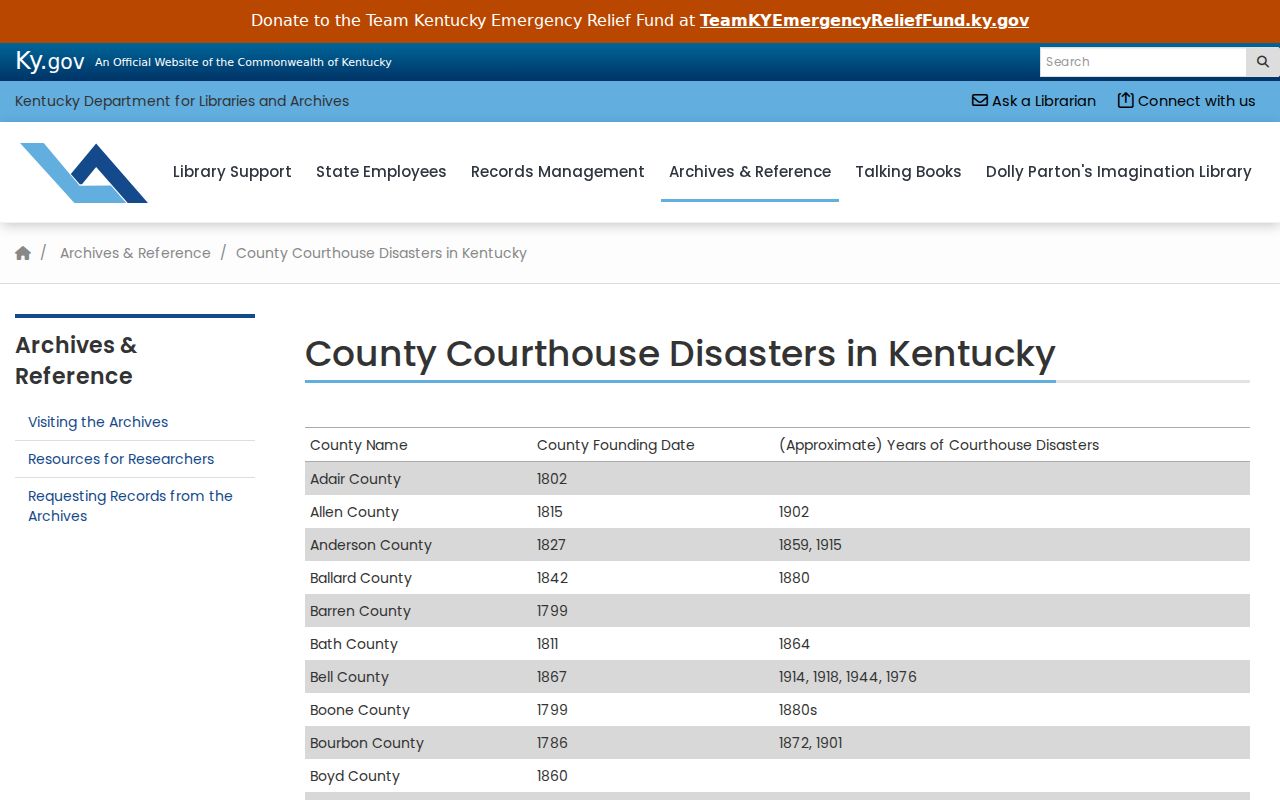
The reference helps label a gap honestly instead of claiming the record never existed.
Request Missing Ashland Records
When the paid portal or qPublic does not show the needed record, use the office route. Ask the Clerk for an instrument, book/page, parcel ID, party name, and narrow date range. Ask the PVA for the parcel and assessment year. Request a Winder Room scan by directory year, street, newspaper date, or Sanborn block.
Document each negative search. State whether the series is index-only, behind an access gate, outside verified online years, protected, or held by another custodian. That log keeps the Ashland previous residents chain reproducible and points to the next useful source.